
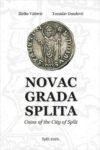
English title:
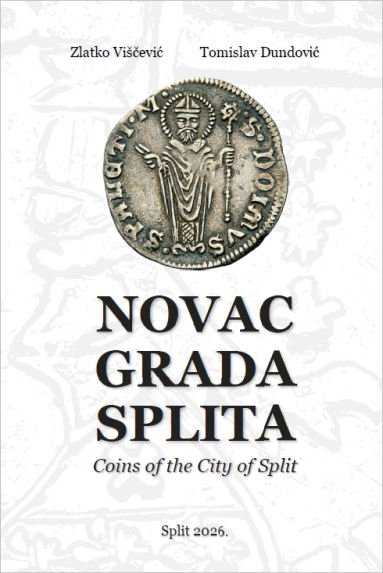
Coins of the City of Split
Original title:
Novac grada Splita
Authors:
Tomislav Dundović and Zlatko Viščević
A comprehensive bilingual catalogue of the municipal coinage of Split from the late 12th century to 1518. The book combines earlier numismatic literature with new research and provides a systematic catalogue of 73 principal coin types and 271 variants, including 38 variants not recorded in previous standard references.
About the book
Coins of the City of Split is the first standalone numismatic catalogue devoted exclusively to the municipal coinage of Split.
Earlier literature treated Split coinage only as part of broader works on Croatian, Dalmatian or medieval coinage. This book brings the material together in a dedicated and systematic catalogue based on established literature by authors such as Luschin, Stockert, Rengjeo, Mimica and Dobrinić, supplemented by new research and previously unpublished observations.
The catalogue covers 73 principal coin types and 271 catalogued variants. Of these, 38 variants are additions compared with earlier references, increasing the documented catalogue corpus by approximately 13%.
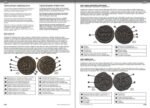
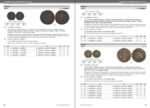
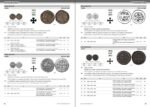
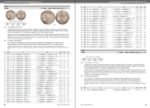
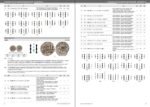
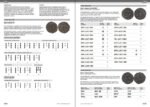
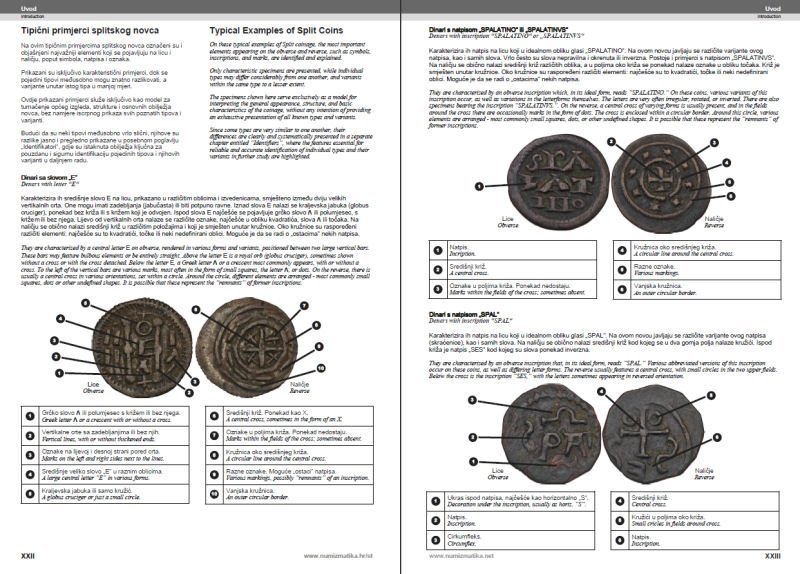
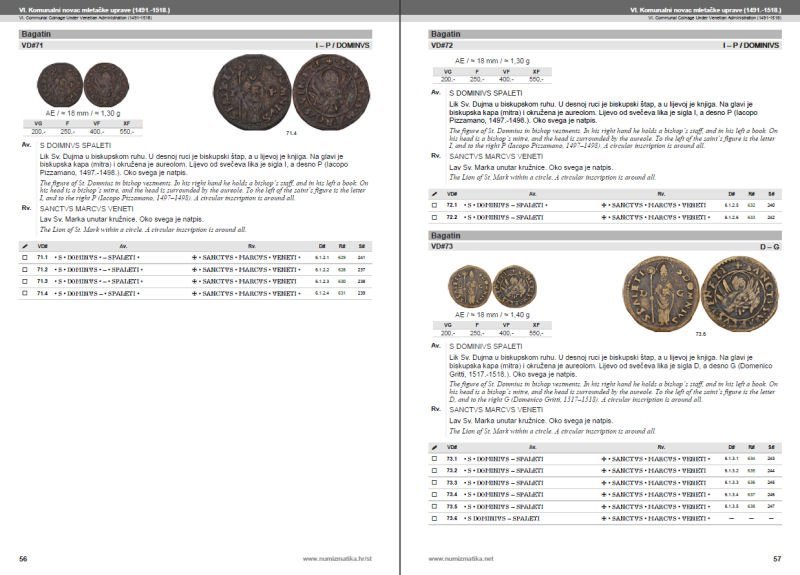
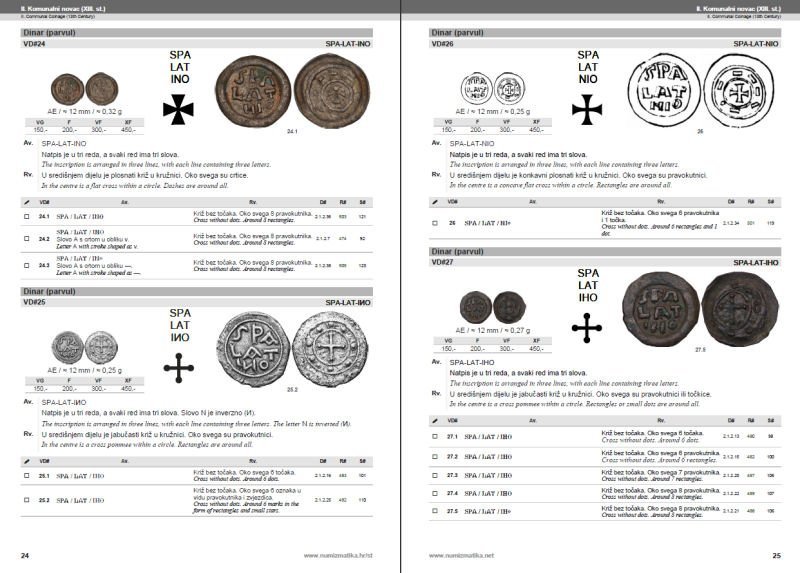
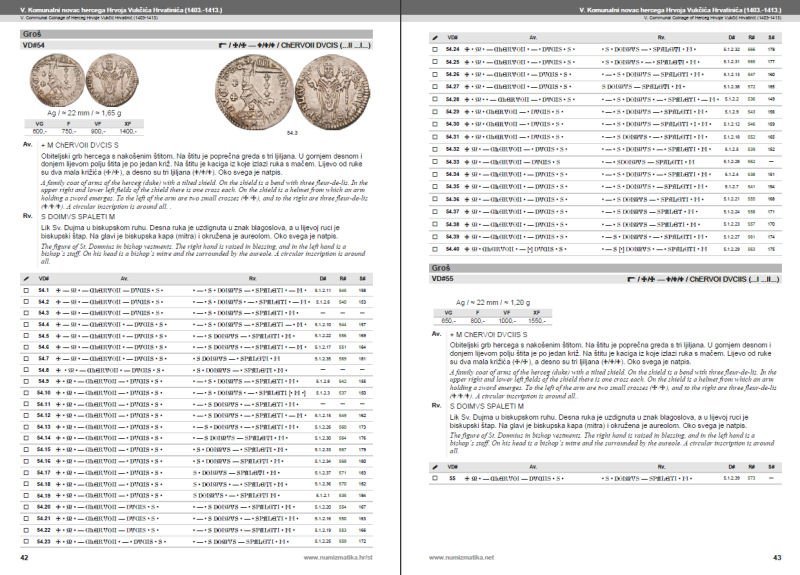
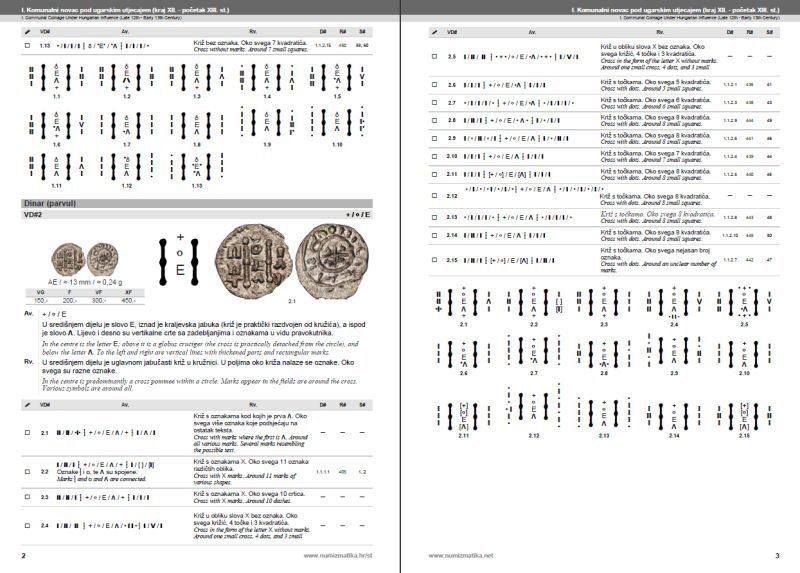
Particular emphasis is placed on practical identification. Most coin types are illustrated both at actual size and enlarged, followed by detailed descriptions of the obverse and reverse and tables showing variations in legends and symbols.
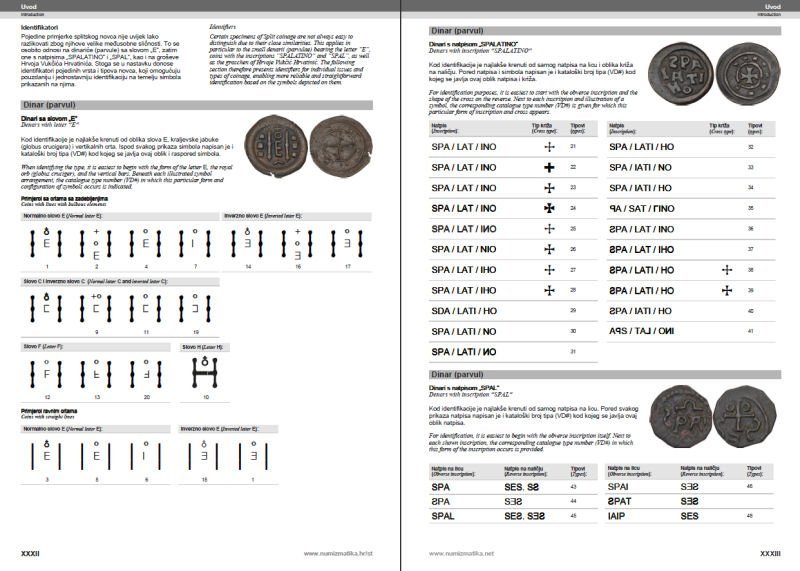
Special identification guides help distinguish difficult groups that have traditionally caused problems for collectors, particularly dinars with the letter “E” and issues bearing forms of the legend “SPALATIN”.
Reference concordances connect the catalogue numbers with Dobrinić, Rengjeo and Stockert, while market values in euros are provided for four grades of preservation.
What the book includes
- 73 principal coin types
- 271 catalogued variants
- 38 variants added compared with earlier references
- Approximately 13% increase in the documented catalogue corpus
- Split dinars or denari
- Parvuli
- Piccoli
- Grossi of Duke Hrvoje Vukčić Hrvatinić
- Dinars of Duke Hrvoje Vukčić Hrvatinić
- Half-dinars of Duke Hrvoje Vukčić Hrvatinić
- Venetian bagattini issued for Split
- Actual-size illustrations for most coin types
- Enlarged illustrations for easier identification
- Colour images
- Black-and-white illustrations where colour images are unavailable
- Detailed obverse and reverse descriptions
- Tables of legend variants
- Tables of symbol variants
- Identification features for difficult coin types
- Identification guide for dinars with the letter “E”
- Identification guide for the “SPALATIN” group
- Reference concordances to Dobrinić, Rengjeo and Stockert
- Market values in EUR for four grades of preservation
- Parallel Croatian and English text
Bibliographic details
- English title: Coins of the City of Split
- Original title: Novac grada Splita
- Authors: Tomislav Dundović and Zlatko Viščević
- Edition: 1st edition
- Year: 2026
- ISBN: 978-953-46719-1-7
- Languages: Croatian and English
- Pages: 104
- Dimensions: 23 × 16 cm
- Binding: Hardcover
- Paper: Matte coated art paper
- Illustrations: Colour images and black-and-white illustrations
- Principal coin types: 73
- Catalogued variants: 271
- Newly documented variants: 38
- Market values: EUR, for four grades of preservation
- Subject: Numismatics – medieval and municipal coinage of Split
- Period covered: late 12th century–1518
Contents
- Table of Contents
- Foreword
- Introduction
- History of Split Coinage
- Typical Examples of Split Coinage
- Dinars with the Letter E
- Dinars with the Legend SPALATINO or SPALATINVS
- Dinars with the Legend SPAL
- Dinars – Piccoli
- Dinars with the Head of St Domnius
- Grossi of Hrvoje Vukčić Hrvatinić
- Dinars of Hrvoje Vukčić Hrvatinić
- Half-Dinars of Hrvoje Vukčić Hrvatinić
- Venetian Bagattini
- How to Use This Book
- Coin Names
- Catalogue Numbers
- Grades of Preservation
- Numismatic Values
- Images
- Identification Features
- Concordance of Catalogue Numbers
- Sources
- Municipal Coinage under Hungarian Influence
- Dinar (Parvul)
- 13th-Century Municipal Coinage
- Dinar (Parvul)
- Early 14th-Century Municipal Coinage
- Dinar (Parvul)
- Dinar (Piccolo)
- Municipal Coinage under Venetian Influence
- Dinar (Parvul)
- Municipal Coinage of Duke Hrvoje Vukčić Hrvatinić, 1403–1413
- Grosso
- Dinar
- Half-Dinar
- Municipal Coinage under Venetian Administration, 1491–1518
- Bagattino
Who is this book for?
This catalogue is intended for collectors of Split, Dalmatian, Croatian and medieval coinage, as well as professional numismatists, dealers, auction houses, museums, libraries and researchers.
Its detailed identification features, variant tables and reference concordances make it particularly useful for attributing difficult or previously confusing types, while the bilingual Croatian–English format makes the work accessible to both regional and international collectors.
Condition
- new